



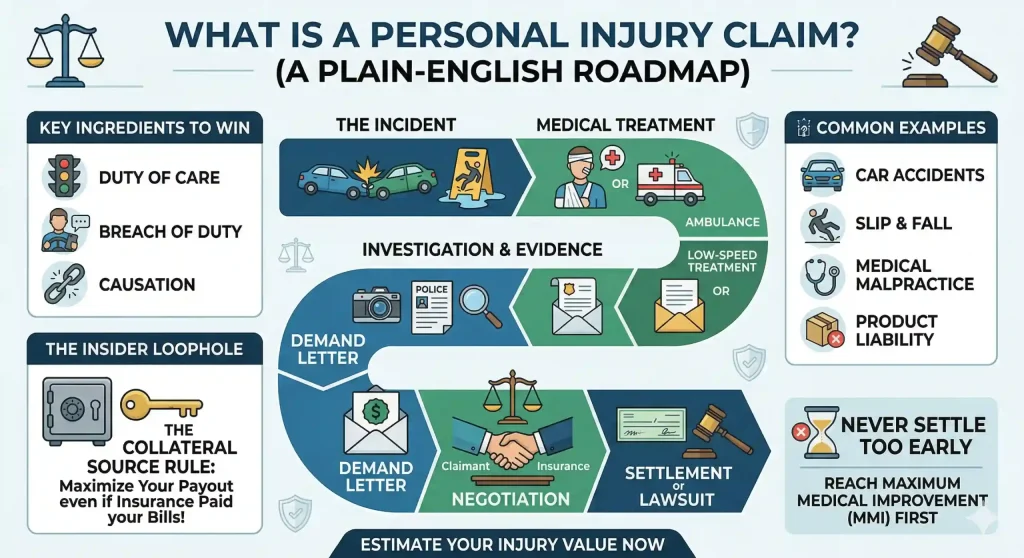
A personal injury claim is a formal demand for payment made against an at-fault person or their insurer after you suffer physical, emotional, or financial harm from someone else’s negligence. It follows a set process: notify the insurer, gather evidence, reach maximum medical improvement, then send a demand letter.
- Personal injury claims demand payment from an at-fault party for physical, emotional, or financial harm caused by negligence.
- Common case types include motor vehicle accidents, slip and fall, medical malpractice, product liability, and workplace injuries.
- Filing without a lawyer requires notifying the insurer, gathering evidence, reaching MMI, then sending a demand letter.
- Most states allow 2 to 3 years to file, but claims against government entities may require notice within 6 months.
- Winning only requires proving it’s more likely than not (51%) that the other party was at fault.
- The Collateral Source Rule lets you claim full retail medical costs even if your insurer already paid a discounted rate.
For a broader look at how injury type affects your claim’s value, see our common personal injuries guide.
Personal Injury Means Someone Owes You for Your Harm
In personal law injury cases, the goal is “compensatory damages.” This means the court or insurance company provides money to return you to the position you were in before the accident.
Types of Personal Injury Cases
While every accident is unique, most fall into these common types of personal injury cases:
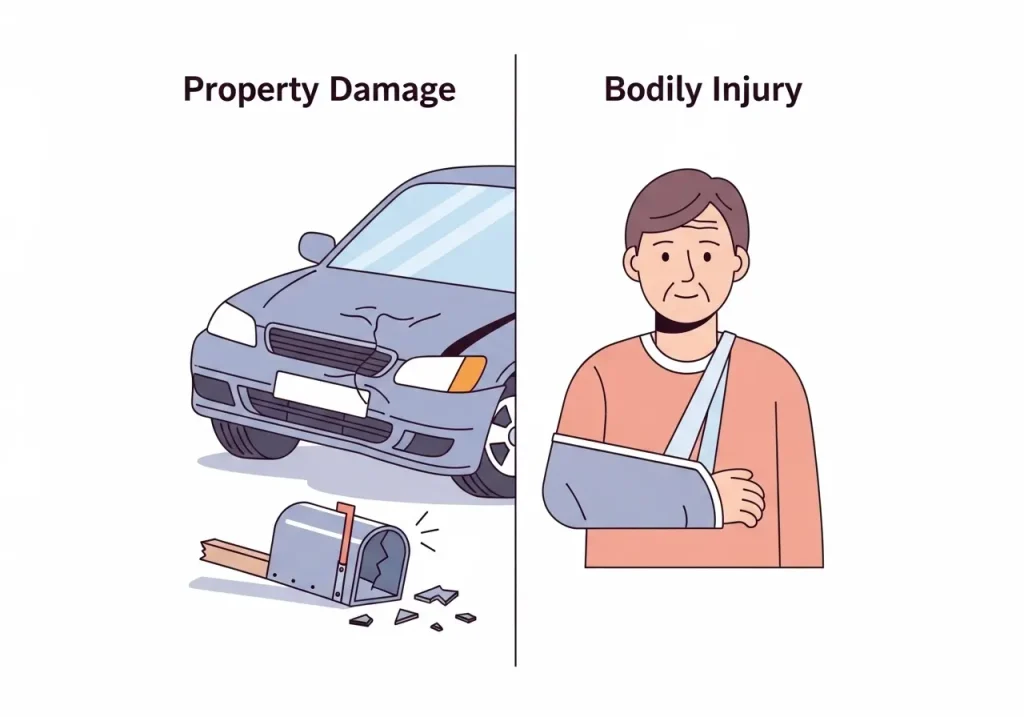
Motor Vehicle Accidents: The most common personal injury lawsuit category (cars, trucks, motorcycles). your property damage and injury are usually two separate claims.
Premises Liability: Often called “slip and fall” cases.
Medical Malpractice: Injuries caused by a doctor’s professional negligence.
Product Liability: Harm caused by a defective tool or medication.
Workplace Injuries: Though often handled by workers’ comp, these can become personal injury claims if a third party was involved.
File Your Own Claim in 4 Steps (No Lawyer Needed)
Many people ask how to file a personal injury claim without a lawyer to save on the 33% legal fee. If your injuries are minor (like soft tissue bruising) and the fault is clear, follow this flow:
Notify the Insurer: Call the at-fault party’s insurance company and tell them you intend to file a claim. Do not give a recorded statement yet.
Gather the “Evidence Bundle”: Collect police reports, photos of the scene, and every medical receipt.
Reach “MMI”: Wait until your doctor says you are healed before discussing money.
Send a Demand Letter: Write a professional letter listing your total medical costs, lost wages, and a request for “pain and suffering” damages.
You Have 2 to 3 Years to File (6 Months Against the Government)
In the legal world, this is called the Statute of Limitations. If you miss this deadline, you lose your right to sue forever.
Standard Deadline: In most U.S. states, you have 2 to 3 years from the date of the accident to file a personal injury lawsuit.
The Exception: If you are suing a government entity (like a city bus or a state-run hospital), you may only have 6 months to file a formal notice.
What Are Your Chances of Winning?
The chances of winning a personal injury lawsuit or settlement depend on the “Preponderance of Evidence.” Unlike criminal trials (beyond a reasonable doubt), you only need to prove that it is “more likely than not” (51%) that the other person was at fault.
Your chances of winning increase significantly if you have:
Immediate Medical Records: A doctor’s visit within 72 hours of the accident.
Third-Party Witnesses: People who saw the accident but don’t know you personally.
Clear Liability: For example, being hit from behind while stopped at a red light.
Claim Full Medical Costs Even After Your Insurer's Discount
Here is something most blogs won’t tell you: The Collateral Source Rule.
The Loophole: In many states, the insurance company cannot reduce the amount they owe you just because your own health insurance already paid your bills.
Why it matters: You can claim the full retail cost of the medical bill in your settlement, even if your health insurance got a “discount.” This can significantly increase your final check.
Insurers Monitor Your Social Media, So Go Private Now
nsurance companies now hire “digital adjusters” to monitor your Instagram and Facebook.
The Risk: If you claim you have “Loss of Enjoyment of Life” but post a photo of yourself at a BBQ or a concert, they will use it to argue your personal injury claims are fraudulent.
Pro-Tip: Set all accounts to private and stop posting entirely until your settlement check has cleared.
A personal injury claim is essentially a business negotiation. The insurance company wants to pay as little as possible, and you need to prove your life has been impacted.
Use our free Personal Injury Settlement Calculator to calculate your medical bills, lost wages, and pain multiplier to see what your case is truly worth in today’s market.