



Not all injuries are treated the same way in a personal injury claim. The type of injury you have affects how it’s diagnosed, how long recovery typically takes, how insurance companies evaluate it, and ultimately what kind of compensation is realistic. Before you can understand what your claim might be worth, it helps to understand your injury itself, and how it’s typically viewed in the claims process.
This guide covers the most common injury types seen in personal injury claims, and what tends to affect their value. For the bigger picture on how injuries and compensation connect, see our full injuries and compensation overview.
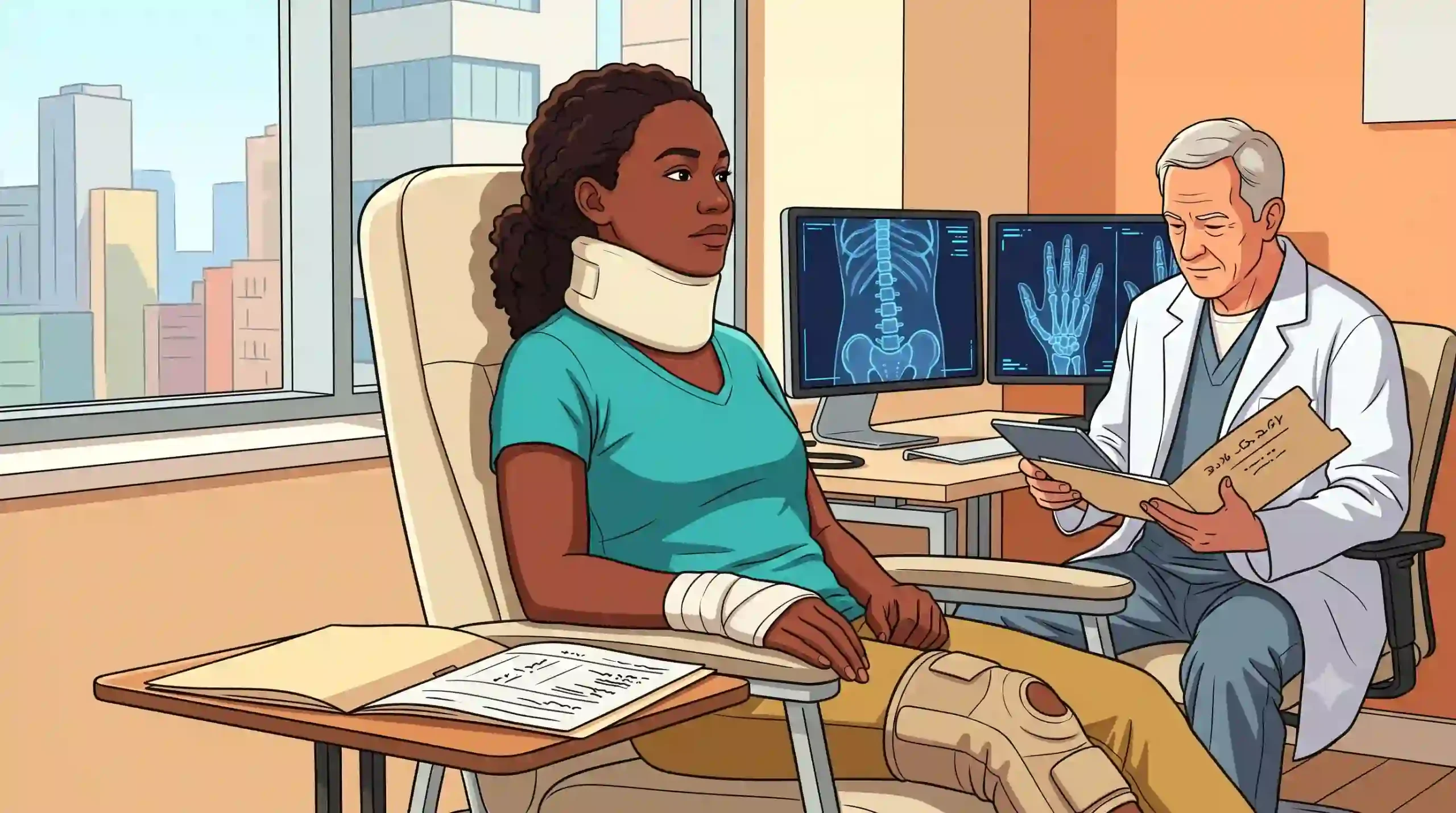
What counts as a "personal injury" claim
A personal injury claim generally applies when you’re physically hurt due to someone else’s negligence, whether that’s a car accident, a fall on unsafe property, a defective product, or a workplace incident. For a full breakdown of what qualifies and how the process works from start to finish, see our what is a personal injury claim guide.
Many accidents involve both an injury to you and damage to your property, most commonly your vehicle. These are generally treated as two separate claims, even when they come from the same accident, covered in more detail below.
Common injury types in personal injury claims
Soft tissue injuries (whiplash, sprains, strains) Among the most common injuries in car accidents, soft tissue injuries affect muscles, ligaments, and tendons rather than bones. They’re often harder to prove through imaging alone, which means consistent medical documentation matters more than usual for these claims.
Neck and back injuries Ranging from mild strain to herniated discs, neck and back injuries are common across nearly every accident type, car accidents, slip and falls, and workplace incidents alike. Severity varies enormously, which is why settlement ranges for these injuries tend to be wide.
Fractures and broken bones Generally easier to document through imaging than soft tissue injuries, fractures tend to have more predictable recovery timelines, though complications like improper healing or the need for surgery can significantly affect both recovery and compensation.
Hand and finger injuries Often overlooked in severity, hand and finger injuries can have an outsized impact on someone’s ability to work, particularly in manual or skilled trades. Compensation often accounts for this functional impact, not just the physical injury itself.
Head injuries and concussions Ranging from mild concussions to traumatic brain injury (TBI), head injuries are taken particularly seriously in claims due to the potential for long-term cognitive or neurological effects, even when initial symptoms seem mild.
Scarring and disfigurement Beyond the physical injury itself, visible scarring or disfigurement is often factored into pain and suffering calculations separately, since it can have a lasting psychological and social impact.
How injury type affects your compensation
- Documentation difficulty: injuries visible on imaging (fractures, herniated discs) are generally easier to prove than soft tissue injuries, which rely more on consistent treatment records
- Recovery timeline: longer recovery periods generally support higher pain and suffering calculations
- Permanence: a fully-healed injury is valued differently than one with lasting impairment or chronic pain
- Impact on work: injuries that affect your specific job or trade, like a hand injury for a musician or tradesperson, can increase the compensation tied to lost earning capacity
Estimating compensation for your specific injury
General injury information can only tell you so much. For a closer estimate based on your specific injury, see our dedicated tools and guides:
Try our free personal injury settlement calculator for a general estimate based on your injury type and medical costs.
Property damage vs. bodily injury
When an accident damages your property, most often your vehicle, alongside your physical injury, these are generally handled as two separate claims. Property damage covers repair or replacement costs, while bodily injury covers your medical costs, lost wages, and pain and suffering. They’re often filed together but evaluated independently, and settling one doesn’t automatically resolve the other. See our full guide on property damage and bodily injury claims for more detail.
Related guides
For a full look at how compensation and settlements are calculated across injury types, see our Compensation & Settlements guide. If your injury happened in a specific type of accident, car, truck, workplace, or a fall, see our Accidents guide for claim details by accident type.
See how these factors add up for your case , Get your free estimate
Frequently Asked Questions
Soft tissue injuries like whiplash tend to be the hardest, since they often don't show up clearly on imaging. Consistent, well-documented medical treatment is especially important for these claims.
Yes. Even injuries that fully heal can result in compensation for medical costs, lost wages, and temporary pain and suffering, though the amount is typically much lower than for a permanent or severe injury.
Yes. If an accident aggravates a pre-existing condition, you may still be compensated for the worsening of that condition, though insurers often scrutinize these claims more closely.
Head injuries, especially concussions and TBI, often carry higher settlement values due to the potential for long-term cognitive effects, even when the initial injury looks less severe than a visible fracture.
Yes. Seeking treatment promptly, even for an injury that seems minor, creates a medical record that supports your claim. Delayed treatment can be used to argue the injury wasn't serious or wasn't caused by the accident.
Disclaimer: This guide is provided for general informational purposes only and does not constitute legal or medical advice. Injury severity, documentation requirements, and compensation vary significantly by individual case and state law. Nothing on this page should be relied upon as a substitute for consultation with a licensed attorney or medical provider regarding your specific situation.