



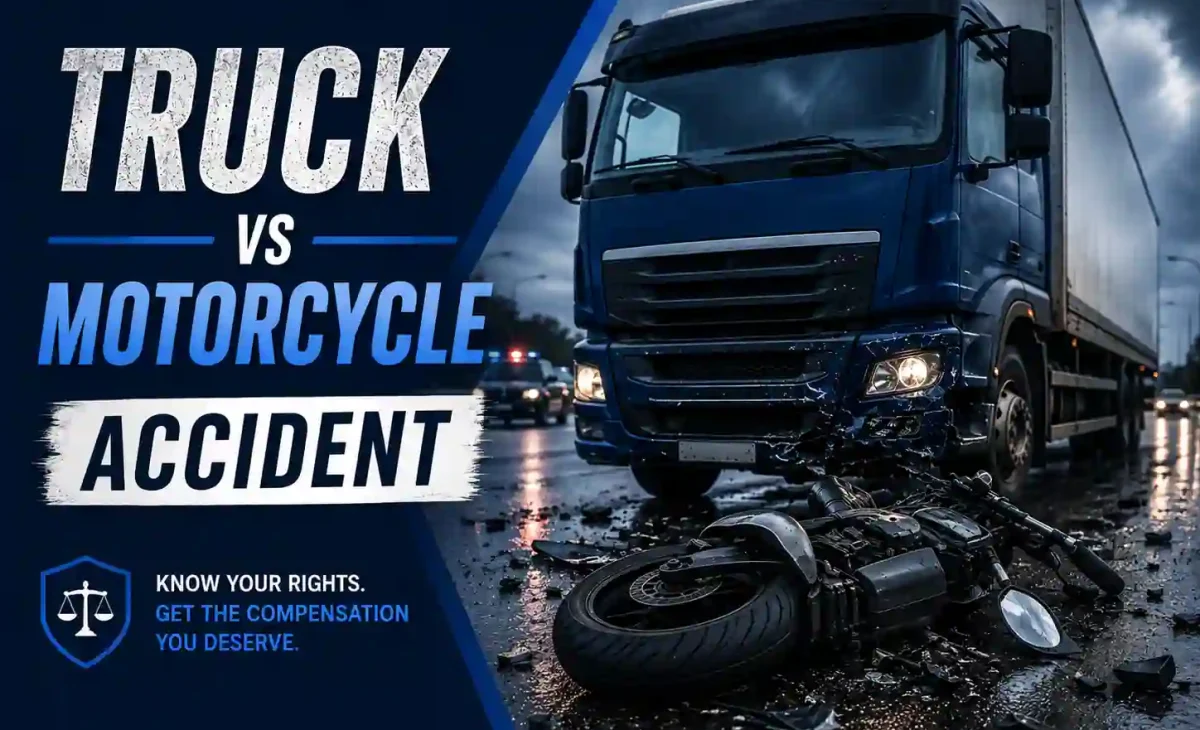
Truck and motorcycle accidents are grouped together here because they share something most car accidents don’t: a serious size and force mismatch between vehicles. A commercial truck can weigh 20–30 times more than a passenger car, and a motorcycle offers close to no protection at all. That mismatch changes everything. The injuries tend to be more severe, the liability can involve more than one party, and settlements are often calculated differently than a standard car accident claim.
This guide covers both, since the claims process overlaps in several places, while calling out where truck claims and motorcycle claims genuinely diverge. For other accident types, visit our accident claims hub.
Why these claims are different from a standard car accident
- More severe injuries are common. Because of the size or protection mismatch, injuries from truck and motorcycle accidents tend to be more serious, which generally means higher medical costs and larger settlements.
- More than one party can be liable. In a truck accident, liability isn’t always limited to the driver. The trucking company, the vehicle owner, a cargo loading company, or even a maintenance contractor may share fault.
- Commercial insurance policies are involved in truck claims. Commercial trucking companies typically carry much higher insurance limits than a personal auto policy, which changes how negotiations play out.
- Motorcycle claims often face bias. Insurance adjusters and juries sometimes assume a motorcyclist was speeding or at fault by default. This is a real pattern worth knowing about going in, even though it isn’t a legal rule.
Truck accident settlements
Truck accident settlement amounts vary widely depending on the severity of the injury, Because of the size and weight difference between trucks and passenger vehicles, the most common truck accident injuries tend to be more severe than injuries from a typical car accident, ranging from whiplash to traumatic brain injury. who’s found liable, and whether the truck was being operated commercially at the time.
Who can be held responsible in a truck accident:
- The truck driver, for direct negligence (speeding, fatigue, distraction)
- The trucking company, if they pressured unsafe schedules or failed to maintain the vehicle
- A third-party maintenance or cargo-loading company, if their error contributed to the crash
- The vehicle manufacturer, in rare cases involving a mechanical defect
What affects a truck accident settlement amount:
- Severity and permanence of the injury
- Medical costs, both incurred and expected in the future
- Lost wages and impact on future earning capacity
- Whether multiple parties share liability (which can mean multiple insurance policies apply)
- The commercial insurance policy limits involved, which are often significantly higher than personal auto coverage
For a full breakdown of typical settlement ranges and how these factors combine, see our dedicated guide on truck accident settlements.
Motorcycle accident claims
Motorcycle accidents follow the same general claims process as a car accident (proving fault, filing with the appropriate insurance, negotiating a settlement), but a few things are worth understanding specifically:
- Injury severity is often higher relative to the visible damage, since a motorcyclist has far less protection than someone in a vehicle
- Comparative negligence still applies. If you’re found partially at fault, your compensation is typically reduced by that percentage, following the same state-by-state rules as car accidents
- Documentation matters even more. Because of the bias adjusters sometimes hold, thorough documentation (photos, witness statements, and a police report) carries extra weight in a motorcycle claim
- Gear and safety equipment can factor into the case, since some states consider whether a rider was wearing a helmet or protective gear when assessing damages
What to do after a truck or motorcycle accident
The immediate steps are largely the same as any accident, with a couple of additions:
- Seek medical attention right away, even for injuries that seem minor at first
- Call the police and get an official report
- Document the scene thoroughly. For truck accidents, try to note the company name and truck/license number if visible; for motorcycle accidents, document your gear and the full scene, since bias can work against you later
- Avoid giving a recorded statement to any insurance company, including a trucking company’s insurer, before understanding your claim
- For truck accidents specifically, be aware that trucking companies often send investigators to the scene quickly; having your own documentation matters
Filing your claim and deadlines
The statute of limitations that applies to car accidents generally applies to truck and motorcycle accidents too, though truck accidents involving a government entity (like a municipal vehicle) can carry shorter notice requirements. See our settlement laws guide for filing deadlines and other legal basics that apply in your state.
Is a truck or motorcycle accident settlement taxable?
The same general rule applies as with any personal injury settlement: compensation for physical injury is typically not taxable at the federal level, while portions like lost wages or punitive damages may be treated differently. Our settlement laws guide covers taxation and other legal basics in more detail.
Related accident types
If your accident was a standard passenger vehicle collision rather than one involving a commercial truck or motorcycle, see our guide to car accident injury claims.
Get Your Free Injury Estimate Now!
Frequently Asked Questions
Often, yes. This is mainly because injuries tend to be more severe and commercial insurance policies typically carry higher coverage limits than personal auto policies.
Liability can extend beyond the driver to the trucking company itself, especially if unsafe scheduling, inadequate training, or poor vehicle maintenance contributed to the accident.
Some insurance adjusters carry an unspoken bias that assumes the motorcyclist was speeding or at fault. Thorough documentation and, where needed, legal representation can help counter this.
In some states, yes. It can be used to argue comparative negligence, particularly for head injury claims, even if it didn't cause the accident itself. Rules vary significantly by state.
Longer than a standard car accident claim in many cases, since multiple liable parties and commercial insurers can add negotiation time. Straightforward cases may resolve in a few months; more complex ones can take a year or more.
It's worth strongly considering one. Truck accident claims often involve commercial insurers with experienced legal teams, multiple potentially liable parties, and higher-stakes negotiations than a typical car accident claim.
Disclaimer: At Estimate My Injury, our articles and calculators are strictly for educational purposes and do not constitute legal advice. Using this site does not create an attorney-client relationship. Because personal injury laws vary by state, our tools cannot guarantee specific financial outcomes for your claim. For accurate legal counsel, always consult a licensed personal injury attorney about your unique case.