



Slip and fall accidents fall under a legal category called premises liability, meaning the claim isn’t just about the fall itself, it’s about proving the property owner knew, or should have known, about a hazardous condition and failed to fix it or warn you. That distinction shapes everything about how these claims are handled, from what evidence matters most to how long they typically take to resolve.
This guide covers what to do after a slip and fall, how liability is proven, and what affects your settlement timeline. For other accident types, visit our accident claims hub.
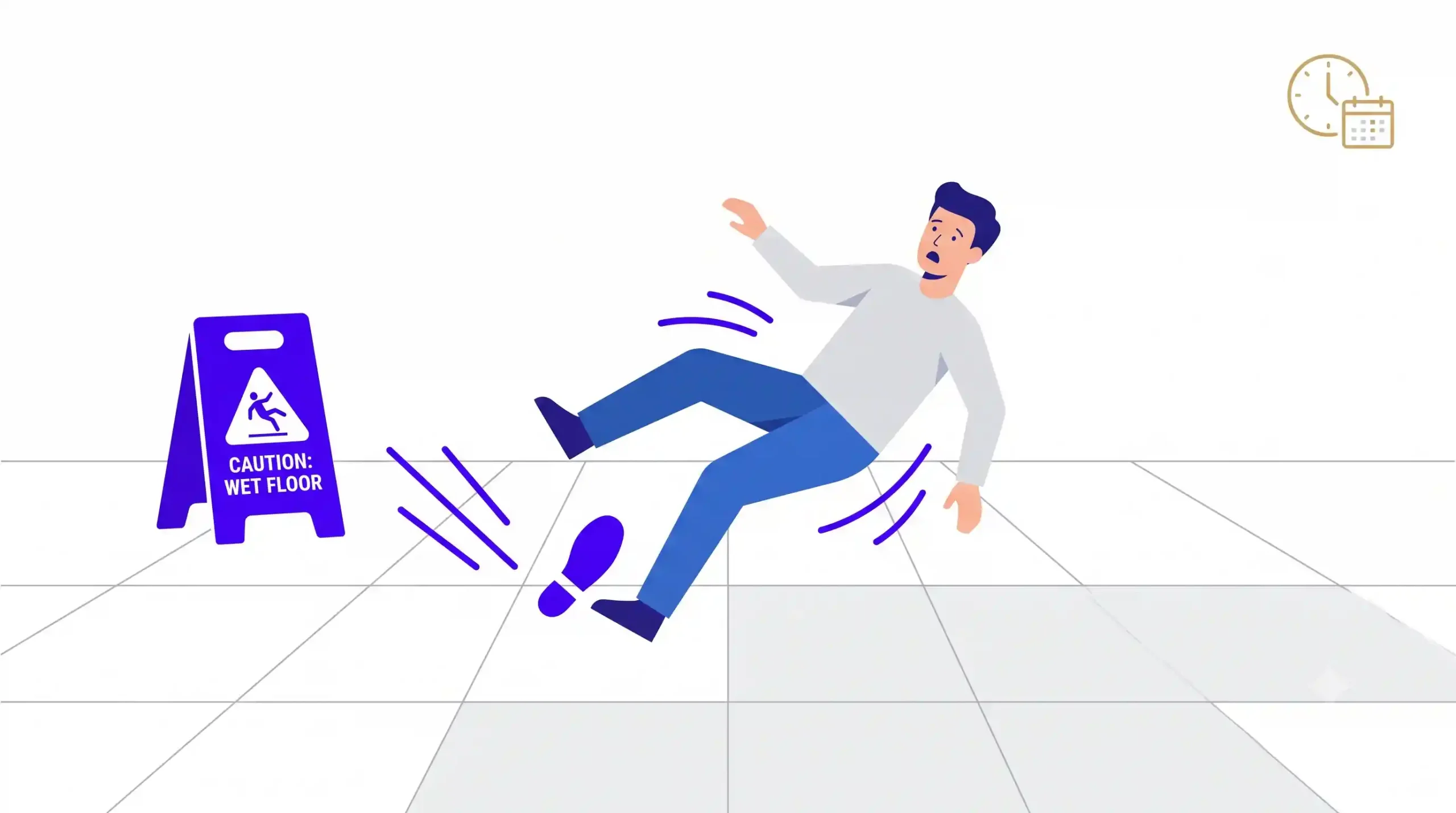
What makes a slip and fall claim different
- It’s about the property owner’s negligence, not just the fall. You generally need to show the hazard existed, the owner knew or reasonably should have known about it, and they failed to address it within a reasonable time
- “Reasonable time” is often disputed. A spill that sat for 30 seconds is treated very differently than one that sat for an hour, timing and evidence around this matter enormously
- Where the fall happened matters. Claims on private property, a business, or government property can each involve different rules, and government property often carries much shorter notice deadlines
What to do immediately after a slip and fall
- Report the fall to the property owner or manager right away, and get it documented in writing if possible
- Take photos immediately, of the hazard itself, the surrounding area, and any warning signs (or lack of them)
- Get witness information, since hazards are often cleaned up quickly after an incident, witnesses can be critical
- Seek medical attention, even if you feel okay, some injuries from a fall don’t show symptoms right away
- Avoid giving a recorded statement to the property’s insurance company before understanding your claim
For a full walkthrough of these steps, see our guide on what to do after a slip and fall accident.
How long slip and fall settlements take
Timelines vary significantly depending on how clear liability is and how severe the injury is. Straightforward cases with strong evidence of negligence can resolve faster, while disputed liability, common in slip and fall cases specifically, often extends the process. For a closer look at typical timelines and what affects them, see our guide on how long slip and fall settlements take.
What affects your slip and fall settlement
- Strength of evidence that the hazard existed and the owner knew or should have known about it
- Severity and permanence of the injury
- Comparative fault — if you were partly responsible, for example, by ignoring a visible warning sign, your compensation may be reduced
- Type of property, since claims involving government property often move differently due to shorter notice requirements and different procedures
- Insurance policy limits of the property owner or business involved
Filing deadlines
Like other personal injury claims, slip and fall claims are subject to a state-specific statute of limitations, and claims involving government property often carry much shorter notice requirements. See our State Laws guide for deadlines and other legal basics that apply in your state.
Other accident types
If your accident involved a vehicle rather than a fall on someone else’s property, see our guide to car accident injury claims.
Wondering what these factors mean for your specific case? Get a free settlement estimate
Frequently Asked Questions
Generally, yes, either that they knew, or that the hazard existed long enough that they reasonably should have known. This is often the most contested part of a slip and fall claim.
Under comparative negligence rules, your compensation is typically reduced by your percentage of fault rather than eliminated entirely, though this varies by state.
Yes. A clearly placed warning sign can significantly weaken a claim, since it may show the property owner took reasonable steps to prevent harm.
Often, yes. Fault in a car accident is frequently clearer from police reports and vehicle damage, while slip and fall liability depends heavily on proving what the property owner knew and when.
Workplace slip and fall injuries are typically handled through workers' compensation rather than a premises liability claim. See our Workplace Accidents guide for how that process differs.
Disclaimer: This guide is provided for general informational purposes only and does not constitute legal or medical advice. Slip and fall and premises liability laws vary significantly by state, and individual case outcomes depend on the unique facts and circumstances involved. Nothing on this page should be relied upon as a substitute for consultation with a licensed attorney regarding your specific situation.