



If you’ve received or are expecting a personal injury settlement, one of the most common questions is whether the IRS considers it taxable income. This guide focuses specifically on the IRS rules and tax code behind that answer. For a broader overview of settlement taxation generally, see our are personal injury settlements taxable guide.
The short answer: in most cases, no, but the details matter, and certain parts of a settlement can be taxed even when the core compensation isn’t.
The general IRS rule
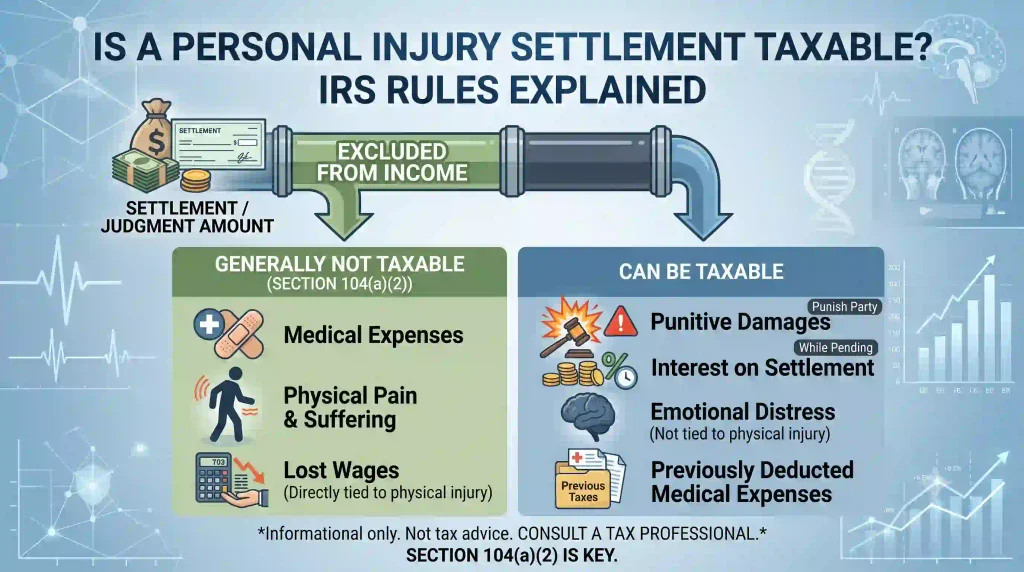
Under Section 104(a)(2) of the Internal Revenue Code, compensation received for personal physical injuries or physical sickness is generally excluded from federal taxable income. This applies whether the money comes from a settlement or a court judgment, and whether you were paid in a lump sum or through structured payments. You can review the IRS’s own guidance on this topic directly, in Publication 4345.
What’s generally NOT taxable
- Compensation for medical expenses related to the physical injury
- Compensation for pain and suffering that stems directly from the physical injury
- Lost wages, if they’re directly tied to the physical injury itself
What CAN be taxable, even in a physical injury claim
- Punitive damages — these are almost always taxable, since they’re meant to punish the at-fault party rather than compensate you for a loss
- Interest on the settlement — if your settlement accrued interest while the case was pending, that interest is generally taxable
- Emotional distress damages not tied to a physical injury — if emotional distress isn’t connected to a physical injury or sickness, the IRS may treat that portion as taxable
- Previously deducted medical expenses — if you deducted medical expenses on a past tax return and were later reimbursed for them through your settlement, that portion may need to be reported as income
Does it matter if the case settled or went to trial?
No. The tax treatment is generally the same whether you received a settlement or a jury verdict, what matters is the nature of the damages (physical injury vs. punitive vs. emotional distress), not how the case was resolved.
What about state taxes?
Federal tax treatment is fairly consistent under Section 104(a)(2), but state tax rules can vary. Most states follow the federal approach and don’t tax physical injury compensation either, but it’s worth confirming your specific state’s treatment, particularly if your settlement includes a significant non-economic damages or punitive component. See our State Laws guide for more on how state-level rules can differ.
Do you need a 1099 for a personal injury settlement?
Generally, no, if the settlement is entirely for physical injury or physical sickness, the paying party typically isn’t required to issue a Form 1099. However, if part of the settlement covers punitive damages, interest, or previously deducted medical expenses, that portion may be reported separately.
How this fits into your overall settlement
Tax treatment is just one factor in understanding what you’ll actually take home from a settlement. For a broader look at how settlements are calculated and what gets deducted, see our Compensation & Settlements guide. You can also get a preliminary estimate here for your own claim.
Frequently Asked Questions
Do I need to report my personal injury settlement on my tax return? If the entire settlement is compensation for a physical injury or sickness, it generally doesn’t need to be reported as income. If any portion includes punitive damages or interest, that portion typically does need to be reported.
Is a car accident settlement taxable? Compensation for physical injuries from a car accident follows the same general rule, generally not taxable, unless it includes punitive damages, interest, or previously deducted medical expenses.
Are workers’ comp settlements taxed differently? Workers’ compensation benefits are generally not taxable at all, under a separate provision from personal injury settlements, though this can vary in specific circumstances.
What if my settlement doesn’t separate out how much is for physical injury versus emotional distress? This is a common source of confusion, and how damages are characterized in the settlement agreement itself often matters. Consulting a tax professional or attorney before finalizing a settlement can help ensure it’s structured clearly.
Should I consult a tax professional before accepting a settlement? If your settlement includes punitive damages, interest, or any component beyond straightforward physical injury compensation, consulting a tax professional before finalizing the settlement can help you understand what portion may be taxable.